
Is Vancouver losing door-to-door mail delivery? Not yet, and not on any schedule Canada Post has published. As of August 27, 2026, no Vancouver postal code between V5K and V6Z appears on the conversion list for 2026 or 2027, while the North Shore converts in March 2027. Vancouver is still inside the national mandate, so the honest answer is later, not never.
If you live in Vancouver proper and you have been reading about the North Shore losing door-to-door delivery, you can stop worrying about a date. There isn’t one. Your neighbors across the bridge have March 2027. You have nothing on the calendar.
The longer answer is more interesting, because the reason Vancouver was skipped tells you a lot about how the rest of this program is going to go, and “not yet” is not the same thing as “never.”
ON THIS PAGE
What the current schedule says
Canada Post publishes a running list of every postal code scheduled for conversion. As of August 27, 2026, the current schedule covers 2026 and 2027.
Here is the British Columbia section of that list.
| Community | Postal codes | Anticipated date |
|---|---|---|
| Abbotsford | V2S, V2T | February 2027 |
| Mission | V2V | February 2027 |
| North Vancouver and West Vancouver | V7M, V7P, V7R, V7S, V7T, V7V, V7W | March 2027 |
| Kelowna | V1V, V1W, V1X, V1Y, V1Z | September 2027 |
| West Kelowna and Tsinstikeptum | V1Z | September 2027 |
| Burnaby | V3N, V5E | October 2027 |
| New Westminster | V3L, V3M | October 2027 |
| Coquitlam, Port Coquitlam | V3B, V3C, V3E | November 2027 |
| Port Moody | V3H | November 2027 |
| Victoria, View Royal, Colwood, Langford | V9A, V9B, V9C | November 2027 |
| Esquimalt, Saanich, New Songhees | V9A | November 2027 |
Vancouver’s postal codes run from V5K through V6Z. Scan the table. Not one of them appears.
V5E shows up, and that trips people up, but V5E is Burnaby, not Vancouver. The V5 prefix straddles the boundary.
So the answer for anyone in Kitsilano, Kerrisdale, Dunbar, Point Grey, Mount Pleasant, East Van, Marpole, Killarney, Renfrew, Hastings-Sunrise or anywhere else inside city limits is the same. You are not on the list.
Why the North Shore went first and Vancouver did not
Canada Post explained its selection method when it announced the first 136,000 addresses in April 2026. The communities picked for the first wave sit next to neighborhoods that already receive mail at community mailboxes.
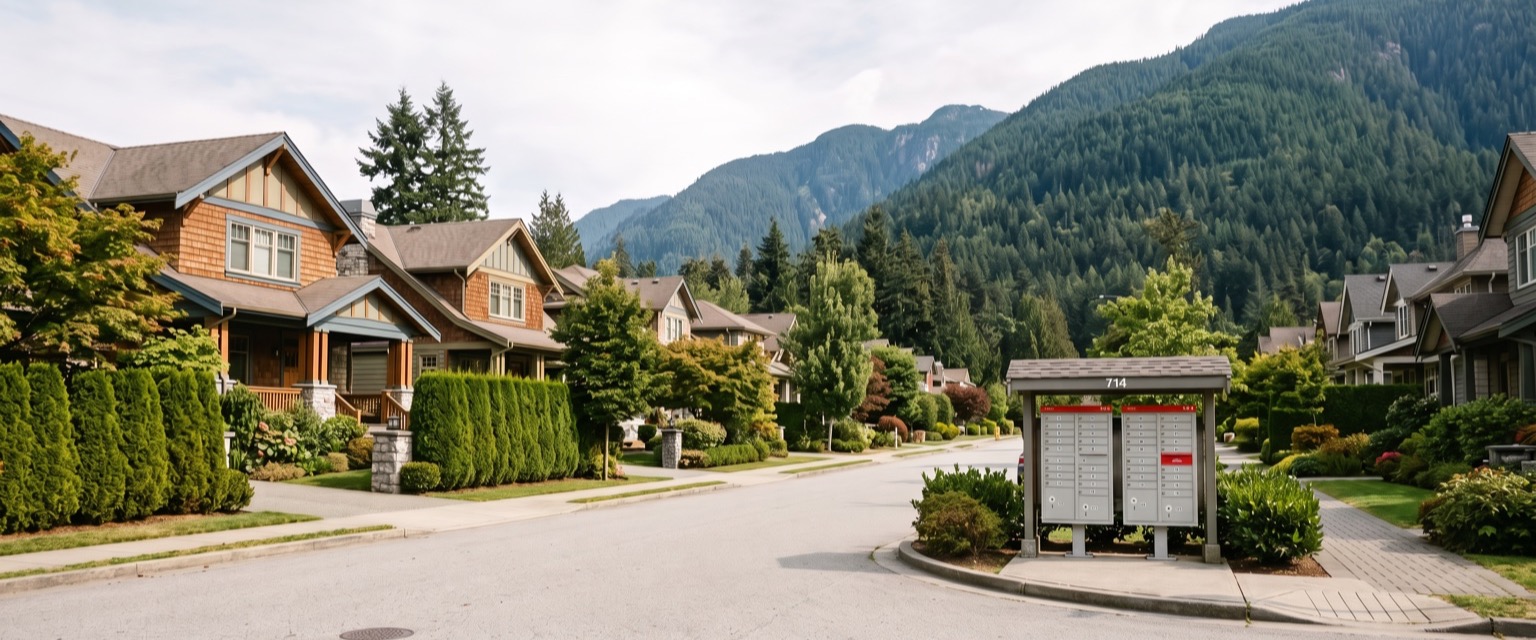
That is a routing decision more than a political one. Where a carrier already services community mailboxes on one side of a boundary, extending that model across the boundary is a smaller operational change than starting from scratch. Parts of North Vancouver and West Vancouver, along with Abbotsford and Mission, fit that description.
Then Canada Post said the other half of it directly, and this is the sentence that matters for Vancouver. Converting dense urban core areas creates additional challenges, and those areas will be handled in later stages of the multi-year program.
Vancouver is the dense urban core. So is downtown Victoria, so is central Toronto, and so is the Plateau in Montreal. Look at the national list and the pattern holds: Etobicoke rather than downtown Toronto, Laval and Longueuil rather than Montreal island, suburban Ottawa postal codes rather than Centretown.
The program started where it was easy.
The physical problem with converting a Vancouver block
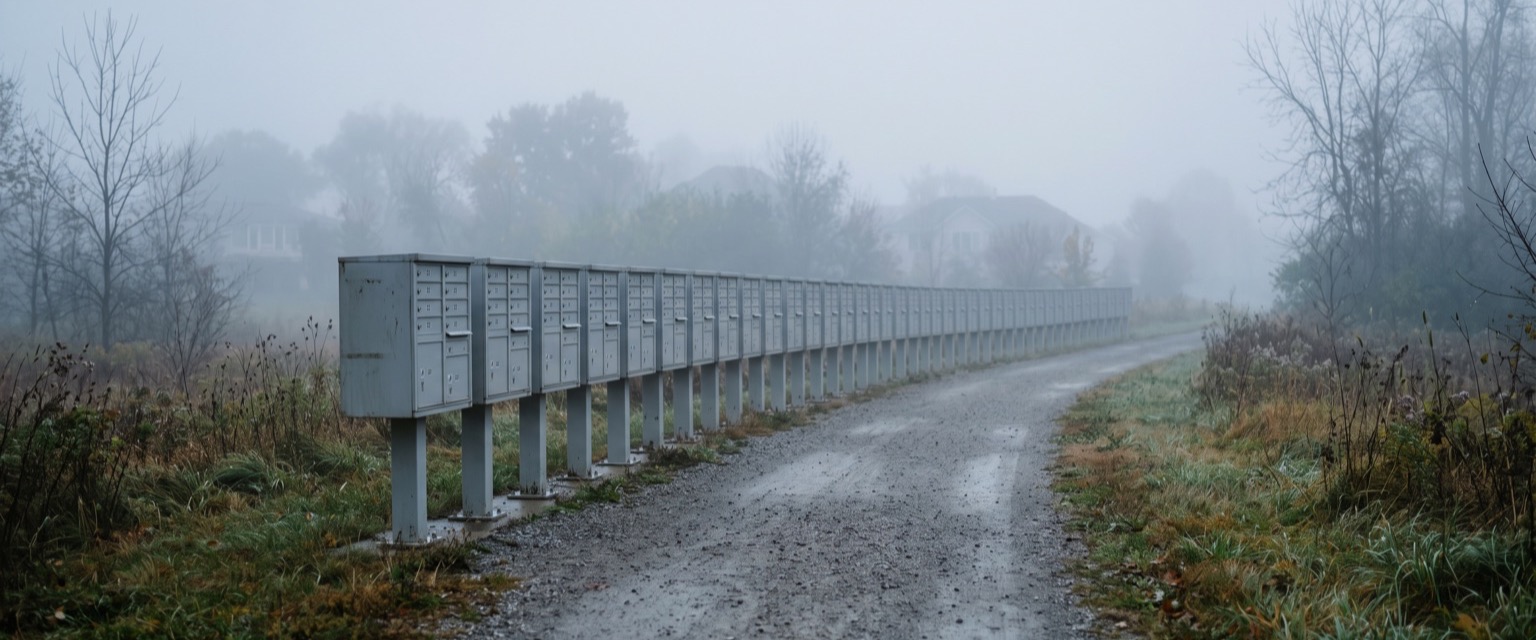
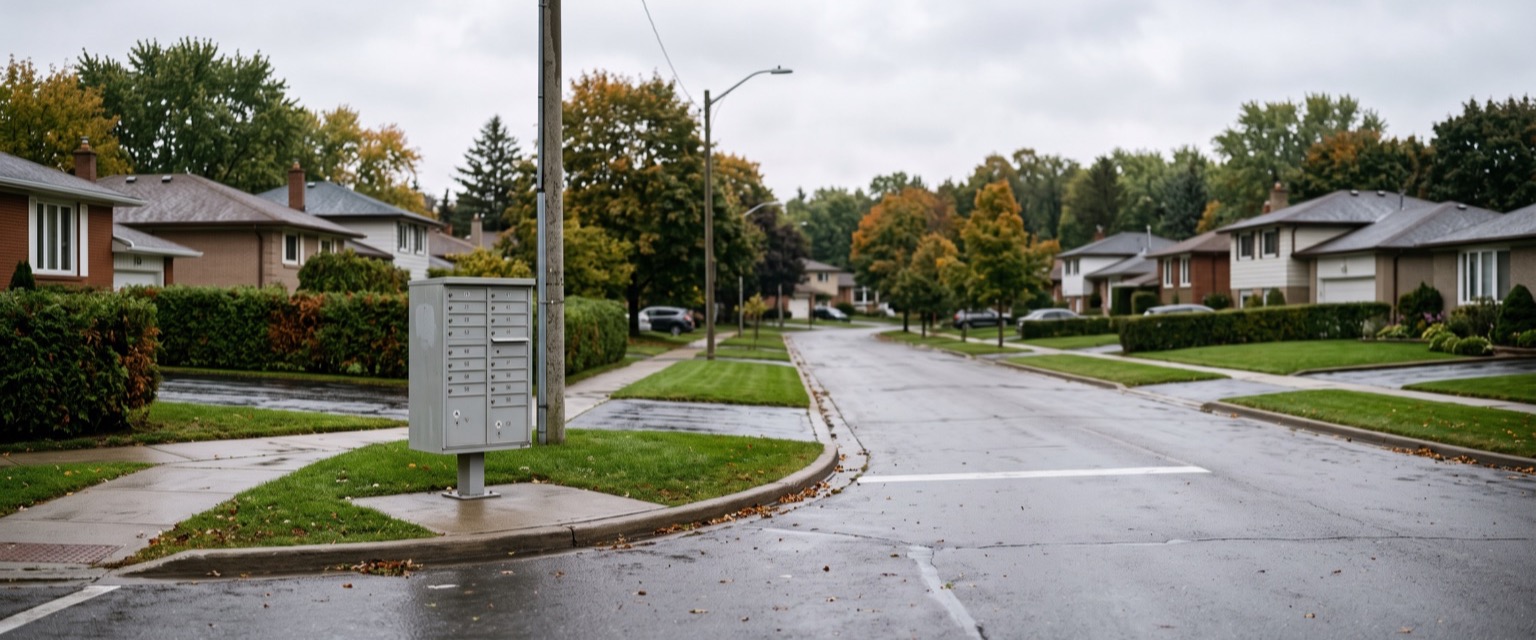
A community mailbox unit is a large piece of street furniture. It needs a level footprint, a place for a person to stand and open a door without being in traffic, room for a carrier’s vehicle to stop, and sightlines that do not turn it into a target.
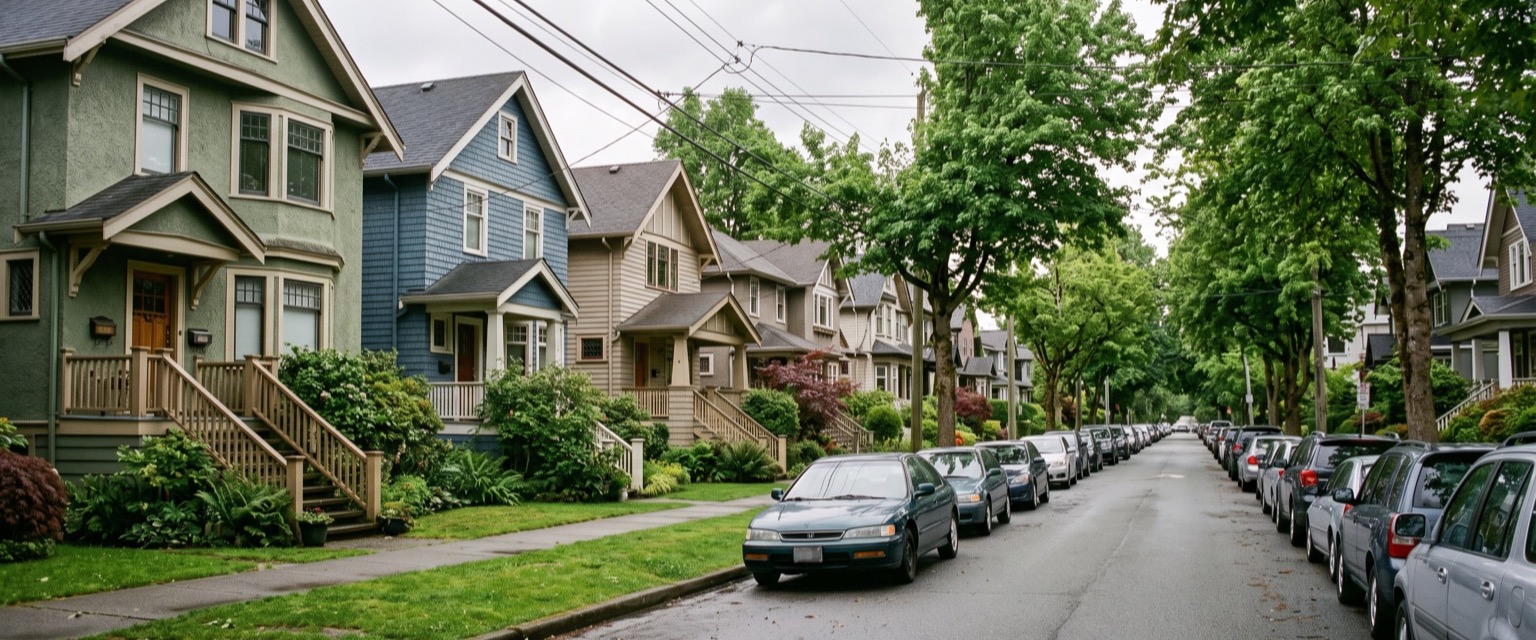
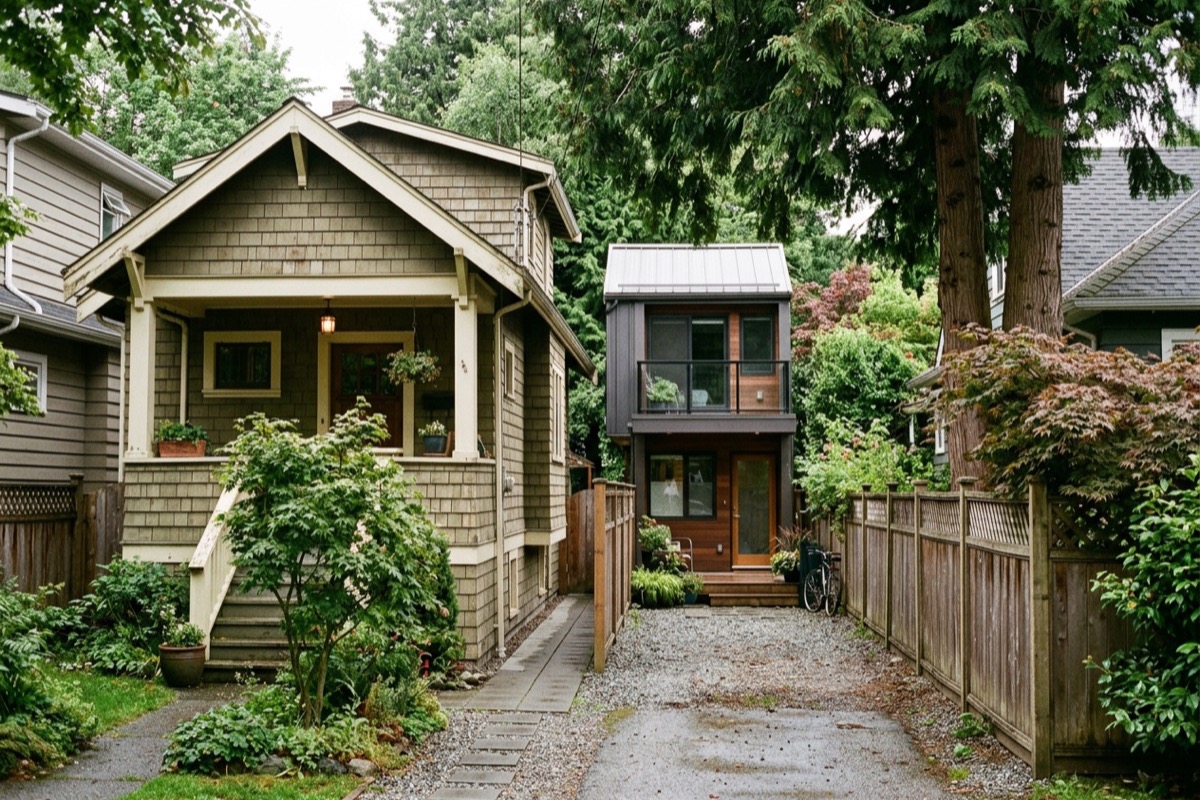
Now picture a typical Vancouver residential block. Cars parked bumper to bumper the full length of the curb. A boulevard that is a strip of grass barely wide enough for the street tree already growing in it. Sidewalks that meet property lines. Laneway houses and basement suites, which means a single lot might hold three separate addresses. In parts of the West End and Mount Pleasant, four-story walkups where the mail already goes to a lobby panel.
There is nowhere to put the box. Not without taking parking, taking boulevard, or negotiating with a property owner for space. Multiply that by every block in the city and you have a problem that does not get solved by scheduling it.
Density also cuts the savings case. The $284 versus $162 per address gap that drove this whole program comes from the May 2025 Industrial Inquiry Commission. That gap is widest in low-density suburbs where a carrier walks long distances for few addresses. On a dense Vancouver block, a carrier covers a lot of addresses in a short walk, so door-to-door delivery is already relatively efficient. Vancouver is the hardest place to convert and one of the least profitable to convert.
That is why it is last.
Vancouver is still inside the mandate
None of this makes Vancouver exempt, and anyone telling you otherwise is reading the schedule and not the mandate.
The September 25, 2025 directive from Minister Joël Lightbound authorized Canada Post to convert all four million remaining door-to-door addresses. Not some of them. All of them. The 2015 moratorium that had blocked conversions was lifted outright. There is no carve-out for cities, no size threshold, and no exception written for density.
The timeline is where it gets vague. Canada Post has said the full conversion takes about five years. Lightbound has said it could take up to nine, with most of the work happening in the first three to four. Those two statements do not reconcile, and the gap between them is roughly where Vancouver sits.
If you want the full background on how the authority was granted, that is the policy trail behind the decision.
Most of Vancouver already lost this fight
Here is the part that reframes the question.
Nearly three quarters of Canadian addresses already receive mail through some form of centralized delivery. That includes community mailboxes, but it also includes apartment lobby panels and rural mailboxes.
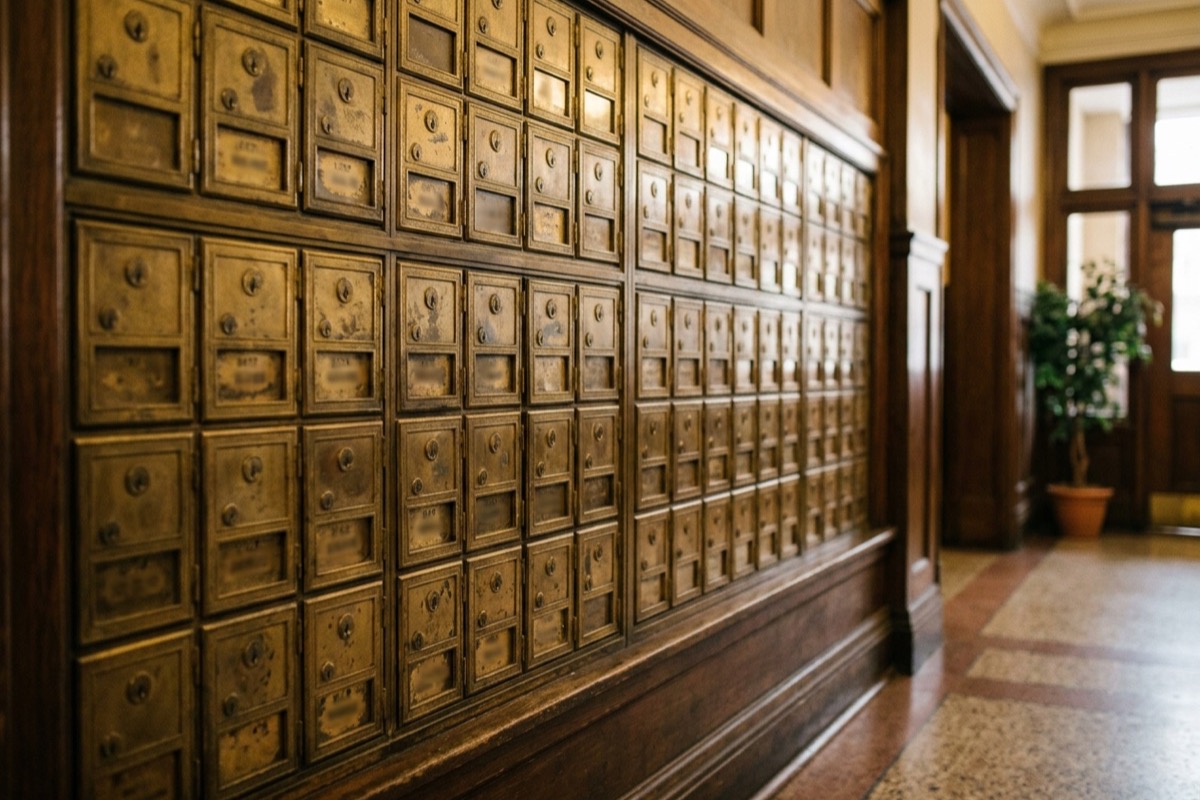
Vancouver’s housing stock is heavily apartments, condos and townhouses. If you live in any of those, your mail already goes to a lobby panel or a bank of boxes in a mailroom. You already walk past a set of locked compartments and check them when you remember. The conversion is not coming for you because it already happened, quietly, when the building was built.
What is left in Vancouver is single-family houses, duplexes and older low-rise buildings with individual slots. That is a real number of homes, and it is exactly the segment that would eventually be converted. But it is a much smaller share of the city than the headlines suggest, and it is why the Vancouver conversion, whenever it comes, will look less dramatic than the North Shore one.
What would tell you Vancouver is next
Three signals, in order of how much they should concern you.
Canada Post updates the conversion list. This is the only one that counts. The corporation maintains the schedule at canadapost.ca/ourtransformation and says it updates as new communities and postal codes are added. When V5 and V6 codes appear, it is real.
Canada Post begins consultation with the City of Vancouver. Siting is worked out with the local government before conversion, and city hall correspondence tends to surface at council meetings. New Westminster council went public with its concerns in July 2026, several months ahead of its October 2027 date. Expect a similar pattern here.
The 2028 wave gets announced. The program has run on a rhythm of large batch announcements, April and June of 2026 so far. Watch for the next one.
Until one of those happens, everything else is speculation.
What changes for Vancouver right now
Two things, and neither is the mailbox.
Letter mail is slower everywhere, including Vancouver. Under the new delivery standards, non-urgent letter mail moves by ground instead of air, and the average delivery window went from three to four days out to three to seven. That applies to your address today regardless of how your mail is delivered.
And post offices are under review. Canada Post is looking at closing urban and suburban locations it considers over-served, alongside the end of the 1994 moratorium on rural closures. If you rely on a particular branch, it is worth knowing that the branch network is not fixed.
Beyond that, Vancouver homeowners with door-to-door delivery keep it for now. The neighbors on the North Shore do not, and what changes at your address over there is a reasonable preview of what eventually arrives here.
If you are already dealing with mail that piles up because you travel, or you run a business from a house and would rather not have your home address on your invoices, our Smart Mailbox service scans mail and emails it to you the day it arrives, and accepts parcels from any courier. That is a convenience decision, not an urgent one, and nothing about the current schedule forces it. Worth saying plainly: a mail service address does not replace your home address for a driver’s license, voter registration or CRA purposes. It handles mail.
For the longer arc, see where residential mail is heading.
Common questions
Is Vancouver losing door-to-door mail delivery?
Not on any published schedule. As of August 27, 2026, no Vancouver postal code between V5K and V6Z appears on Canada Post’s conversion list for 2026 or 2027. Vancouver remains inside the national mandate to convert all four million door-to-door addresses, but no date has been set.
Which Metro Vancouver areas are losing door-to-door delivery?
North Vancouver and West Vancouver in March 2027, Abbotsford and Mission in February 2027, Burnaby and New Westminster in October 2027, and Coquitlam, Port Coquitlam and Port Moody in November 2027.
Why was Vancouver left off the conversion list?
Canada Post has said dense urban core areas create additional challenges and will be handled in later stages of the program. Community mailbox units need street space that dense Vancouver blocks do not have, and the cost savings from conversion are smallest in high-density areas where carriers already cover many addresses in a short walk.
Is V5E a Vancouver postal code?
No. V5E is in Burnaby, and it is scheduled for conversion in October 2027. The V5 prefix crosses the Vancouver and Burnaby boundary, which causes confusion.
Does the conversion affect Vancouver apartment and condo residents?
Not directly. Apartment and condo buildings already use lobby mail panels, which Canada Post counts as centralized delivery. Nearly three quarters of Canadian addresses already receive mail this way.
Sources
- Canada Post, The move to community mailboxes: postal codes scheduled for conversion
- Canada Post, Canada Post expands community mailbox conversions to additional communities in 2027, June 11, 2026
- Government of Canada, Government of Canada instructs Canada Post to begin transformation, September 25, 2025
- Oak Bay News, Switch to community mailboxes expected to take 5 years, Canada Post says, April 17, 2026
- Money.ca, Canada Post ending door-to-door mail delivery, April 2026
- Freshet News, New Westminster urges Canada Post to take a balanced approach to mailbox conversions, July 2026
- The Globe and Mail, These cities and towns will be getting Canada Post’s community mailboxes in 2027, June 11, 2026
Facts in this article were verified against Canada Post’s published conversion schedule on August 27, 2026. That schedule is updated as new communities are added. Check canadapost.ca/ourtransformation for the current list before relying on this page.

Leave A Comment