


The BC election platforms are finally on the table. When we published our first guide to the BC election 2026 for small business, no main party had released a costed plan. In the last ten days all of them have. This update compares the final BC election platforms side by side, shows what is new for small firms since late September, and flags which promises are firm and which depend on optimistic math. Voting day is Saturday, October 24.
Current to October 21, 2026. This is not an endorsement. VanCubers serves businesses of every political stripe, and every claim below is linked to the party document or a news report. To check where and when you can vote, use Elections BC's official election page.
ON THIS PAGE
- What changed: the BC election platforms in one table
- BC NDP: targeted help, unresolved PST
- BC Conservatives: broadest relief, optimistic math
- BC Greens: tenant protection, higher obligations
- CentreBC and OneBC: the smaller BC election platforms
- BC election platforms credibility scorecard
- Which BC election platforms fit which business
- BC election platforms FAQ
What changed: the BC election platforms in one table
The biggest change is that you can now compare actual costed BC election platforms instead of fragments. That improves transparency. It does not remove the central credibility problem: every main party relies on assumptions that may not hold, so judge each plan by what it would actually legislate, not by the headline value.
| Party | New for small business | Watch out for | Fiscal warning |
|---|---|---|---|
| BC NDP | $500M tariff and wildfire loan fund, loans up to $1M over 72 months; $5,000 youth hiring credit; permanent $60M Manufacturing Jobs Fund; $120M forestry fund; temporary fuel-tax relief | Professional-services PST paused, not repealed; higher top personal rates; margin controls on groceries and fuel | About $13.75B deficit in 2026-27; costing includes "measures to be announced" |
| BC Conservatives | Permanently cancel the professional-services PST; three-year PST exemption on machinery, equipment and business software; index the EHT exemption; youth payroll credit; one-in, two-out rule | Equipment exemption expires after three years; small-business rate cut only "as growth allows" | Assumes 3.2% GDP growth by 2029; still a $10.8B deficit in 2029-30 |
| BC Greens | Province-wide commercial rent control and rent registry; one-stop approvals; "Think Small First"; smaller government contracts; fair payment timelines | Minimum wage rises at inflation plus 1%; sectoral bargaining pilot; AI data-centre moratorium; no PST repeal promise found | Depends on a wealth tax estimated at $22.2B once and $5.4B a year, which economists dispute |
| CentreBC | Half-rate EHT for two years in tariff-hit sectors; wider PST exemptions on production equipment; 25% red-tape cut by 2030; 90-day decisions on simple permits | Relief is mostly sector-specific or temporary; new PST audit teams | No governing record; influence depends on winning seats |
| OneBC | 25% cut to personal and corporate income-tax rates; two-point PST cut | Little detail on what spending would absorb the revenue loss | No independently validated costing found |
BC NDP: targeted help, unresolved PST
Of the BC election platforms, the NDP's new small-business measures are the most targeted. A $500 million fund would give tariff- or wildfire-hit firms interest-free loans of up to $1 million for as long as 72 months. A refundable $5,000 credit would go to a small business that gives an 18-to-30-year-old their first full-time, 12-month job. Manufacturers and forestry suppliers gain the most: a permanent $60 million Manufacturing Jobs Fund and a two-year $120 million Forestry Jobs Protection Fund, according to the NDP costings reported by Global News.
Transport-heavy businesses would see a temporary 10-cent-per-litre fuel tax suspension. The party claims up to 30 cents in total savings, but only the 10-cent tax cut is a predictable saving. The rest depends on how well a margin "price guard" works.
The unresolved issue is still the professional-services PST. The government paused it by regulation on September 18, four days before the election call, as set out in the province's PST pause announcement. The law itself stays in place, so a re-elected government could switch it back on. We covered the details in our PST pause explainer, and the party's delivery record in BC NDP promises checked against the record.
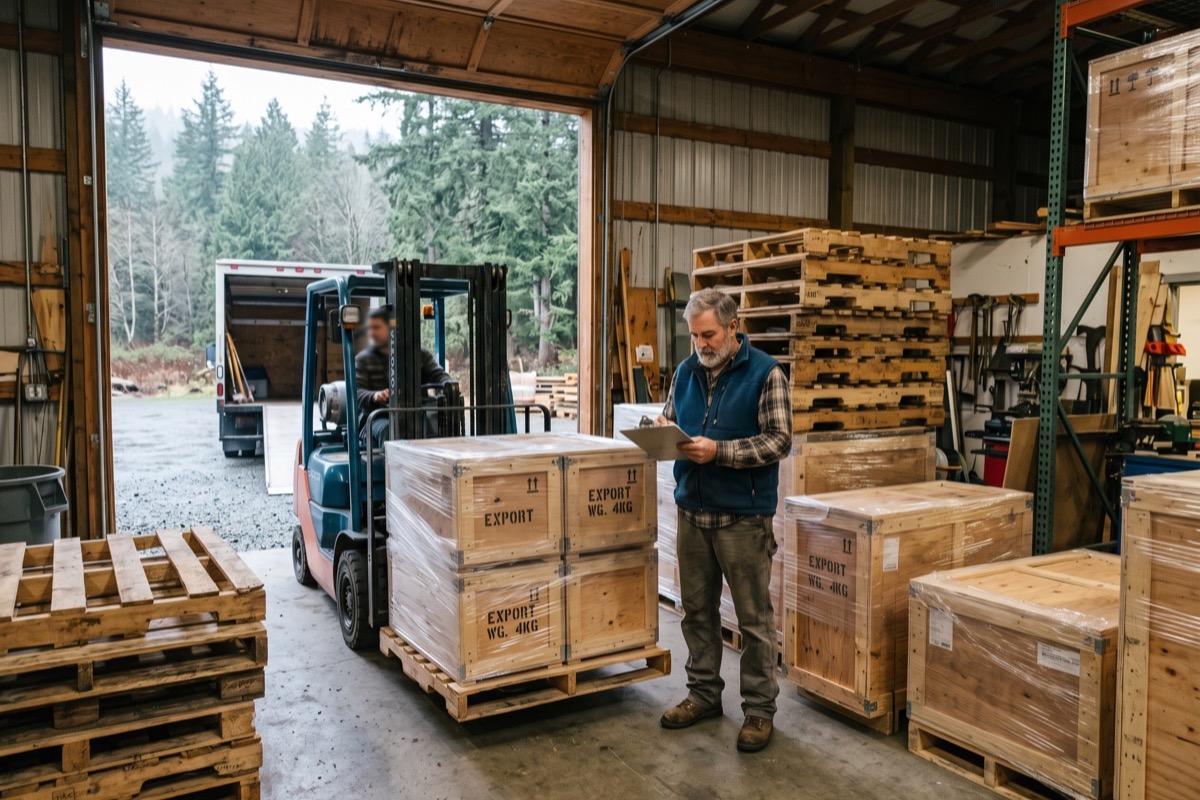
Business verdict on the NDP. Credible access to targeted capital and sector support, especially for exporters, manufacturers and forestry. No permanent PST certainty, and a record that includes cancelling the signature 2024 household rebate months after that election.

BC Conservatives: broadest relief, optimistic math
Among the BC election platforms, the Conservative one now has the clearest PST position. It promises to permanently cancel the professional-services PST expansion and to exempt machinery, equipment and business software from PST for three years, at an estimated $500 million a year. It adds a First Job Tax Credit on the first $5,000 of payroll from 2028-29 and would index the Employer Health Tax exemption to inflation.
The regulatory package is the most conventionally pro-business: cut regulation to 2017 levels in the first term, legislate "one in, two out", set fixed project timelines and restore a Small Business Roundtable. A lower small-business tax rate is promised only "as growth allows", so do not count it as a near-term saving.
The weak point is the math. The plan assumes B.C. growth reaches 3.2% in 2029, well above other forecasts, and still projects a $10.8 billion deficit in 2029-30, as the National Observer's review of the costed platform notes.
BC Greens: tenant protection, higher obligations
The most distinctive idea in the Green entry among the BC election platforms is province-wide commercial rent and vacancy control. Rent increases would be capped during a tenancy, at renewal and between tenants, with a public rent registry. Municipalities could tax vacant storefronts. The details are in the BC Greens small-business policy brief.
That would help established tenants facing renewal shocks. It also shifts risk to landlords, which could make them more cautious about leasing to young, higher-risk businesses unless the rules are designed carefully.
The Green procurement agenda is friendlier to small firms than the party's tax image suggests: one front door for approvals, a "Think Small First" test for new rules, smaller government contracts and fair payment deadlines. The offset is labour cost. Minimum wage would rise by inflation plus 1% each year until it reaches a living wage, and sectoral bargaining would be piloted in retail and food service.

Business verdict on the Greens. The strongest package for commercial tenants, local suppliers, tourism and co-ops. The highest direct labour-cost exposure, and a funding plan that rests on a wealth-tax yield independent economists question.
CentreBC and OneBC: the smaller BC election platforms
CentreBC. Narrow, practical relief: a half-rate Employer Health Tax for two years in tariff-hit sectors, wider PST exemptions on production machinery and repair parts, a $100 million supply-chain fund, and simple permits decided within 90 days. Most of it is sector-specific or temporary. Its influence depends on winning seats or holding the balance of power. See the CentreBC platform.
OneBC. The deepest headline cuts of all the BC election platforms: 25% off personal and corporate income-tax rates and two points off the PST, with a stated four-year path to balance. We found no independently validated costing, so treat these as direction, not savings you can budget for.
BC election platforms credibility scorecard
Promises are only as good as the plan behind them. This is how the three main BC election platforms compare on the tests that predict whether a promise survives the first budget.
| Test | BC NDP | BC Conservatives | BC Greens |
|---|---|---|---|
| Specificity | High on funds and credits, low on permanent PST status | High on tax and regulation, several conditional promises | High on rent, labour and wealth tax, thinner on implementation |
| Costing quality | Transparent line items, plus unannounced measures | Detailed, but depends on unusually strong growth | Detailed, but dominated by a disputed wealth-tax yield |
| Track record | Mixed: several business measures delivered, 2024 rebate cancelled, deficit target missed | No provincial governing record | No provincial governing record |
| Biggest reversal risk | Professional-services PST, because the law is still active | Conditional tax cuts that need fiscal room | Programs funded by the projected wealth tax |
Which BC election platforms fit which business
For a typical service-based small business in B.C., the BC election platforms divide like this:
- BC NDP: targeted financing and hiring help now, with continuing risk that professional-services PST returns later. Best fit for tariff-hit firms, exporters, manufacturers and forestry suppliers.
- BC Conservatives: permanent PST cancellation, temporary equipment PST relief and faster approvals, with a higher risk of spending cuts if growth disappoints. Best fit for professional services, construction, resource and capital-heavy firms.
- BC Greens: protection from commercial rent shocks and better access to government contracts, with higher wage and regulatory obligations. Best fit for commercial tenants, local suppliers, tourism and co-ops.
- CentreBC: narrow centrist relief for tariff-hit sectors, equipment and permits.
- OneBC: the deepest headline tax cuts, with the least fiscal detail.
The one test after October 24. Watch the first sitting of the legislature. A permanent PST repeal, an enacted tax credit, a funded loan program or a legislated approval deadline is far more credible than a news release, a temporary regulation, a review panel or a promise conditional on growth. If you are starting a company now, the rules that already apply regardless of the result are in starting a business in BC in 2026. To press local candidates before Saturday, use our 15 questions to ask candidates.
BC election platforms FAQ
When is the BC election 2026 vote?
Final voting day is Saturday, October 24, 2026. Elections BC lists voting places and hours on its official election page.
Which BC election platforms promise to repeal the professional-services PST?
The BC Conservatives promise to permanently cancel it. The NDP paused it on September 18 but kept the law in place. We found no explicit repeal promise from the Greens.
Which party offers PST relief on business equipment?
The Conservatives propose a three-year PST exemption on machinery, equipment and business software. CentreBC proposes wider exemptions for production machinery and repair parts. The NDP has no broad equipment exemption.
Are the BC election platforms fully costed?
The NDP, Conservatives and Greens all released costings. Each rests on a contested assumption: project-driven revenue and unannounced measures for the NDP, 3.2% growth for the Conservatives, and wealth-tax revenue for the Greens.
What should a small business watch after the election?
Legislation in the first sitting. Enacted laws and funded programs are far more reliable than announcements or promises tied to future growth.








Leave A Comment