

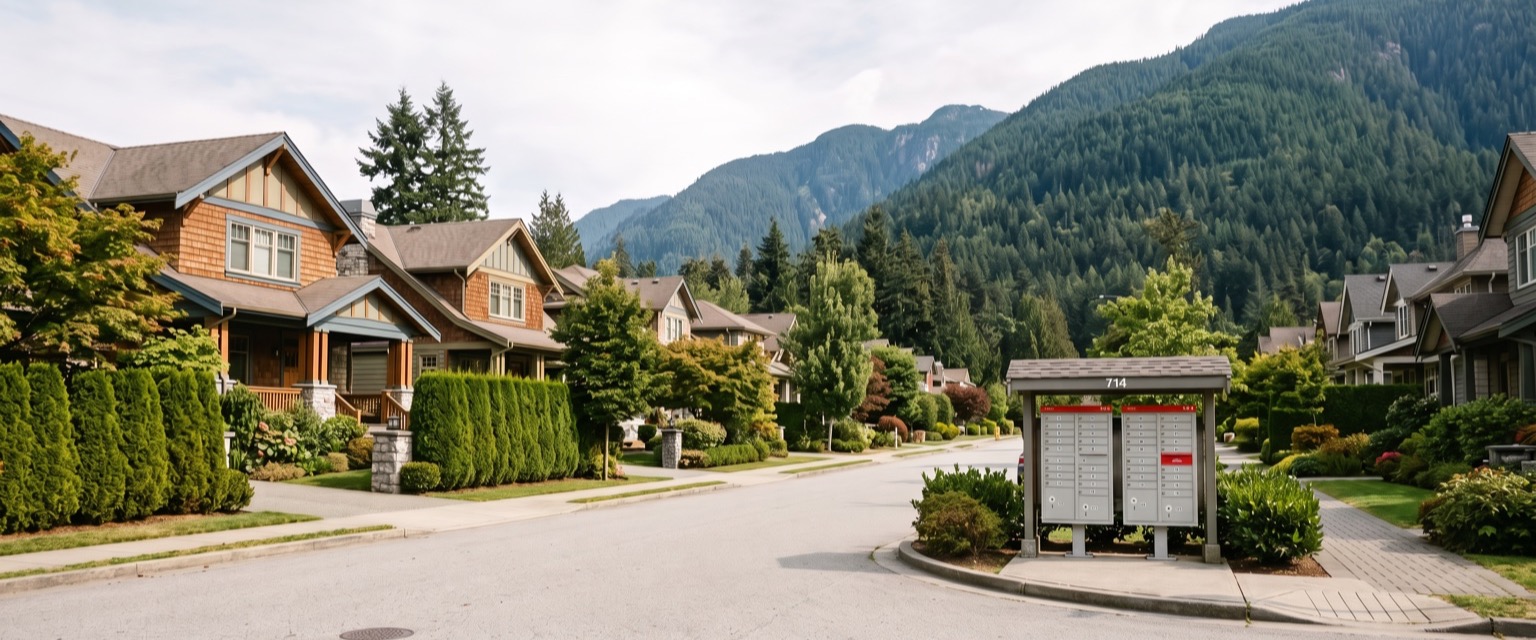
Community mailbox conversion North Vancouver: the anticipated date is March 2027 for postal codes V7M, V7P, V7R, V7S, V7T, V7V and V7W, covering about 23,000 North Shore households in North Vancouver and West Vancouver. Burnaby and New Westminster follow in October 2027, and Coquitlam, Port Coquitlam and Port Moody in November 2027.
The community mailbox conversion in North Vancouver is scheduled for March 2027, and it covers West Vancouver too. About 23,000 North Shore households are in the first national wave. Burnaby and New Westminster follow in October 2027, along with Coquitlam, Port Coquitlam and Port Moody in November.
That is the short version. The rest of this is what actually changes when the date arrives, because most of the coverage has focused on the politics and skipped the part that affects your week.
If you want the background on how the decision got made and who made it, that is how this decision was made. This piece is about your address.
ON THIS PAGE
- Find your postal code and your date
- 1. You get notice and keys before anything changes
- 2. Your mail stops arriving on your path home
- 3. Most parcels fit, some do not
- 4. Nobody tells you anything arrived
- 5. Letter mail is also getting slower
- 6. The accommodation program exists, and it is an application
- 7. You have a say in where the box goes, briefly
- What your options actually are
Find your postal code and your date
These come straight from Canada Post’s published conversion schedule.
| Your area | Postal codes | Anticipated conversion |
|---|---|---|
| North Vancouver and West Vancouver | V7M, V7P, V7R, V7S, V7T, V7V, V7W | March 2027 |
| Burnaby | V3N, V5E | October 2027 |
| New Westminster | V3L, V3M | October 2027 |
| Coquitlam | V3B, V3C, V3E | November 2027 |
| Port Coquitlam | V3B, V3C, V3E | November 2027 |
| Port Moody | V3H | November 2027 |
| Abbotsford | V2S, V2T | February 2027 |
| Mission | V2V | February 2027 |
Two things worth flagging about this table.
Canada Post groups West Vancouver under the North Vancouver heading. V7S, V7T, V7V and V7W are West Van codes and they are on the list, even though the word West Vancouver does not appear as its own row.
And Burnaby is only partly covered. V3N and V5E are on the schedule. Other Burnaby codes are not, at least not yet. If your postal code is not in the table above, you are not scheduled in this round. That includes every Vancouver postal code, and there is a separate piece on why Vancouver is not on the list.
Canada Post describes all of these dates as anticipated and subject to change.
1. You get notice and keys before anything changes
This is the part that gets misreported, so it is worth stating clearly. You will be told.
Canada Post says residents are notified of the location of their community mailbox once the site is finalized, and receive both notice and keys before delivery changes. The conversion process for a neighborhood typically runs months, not weeks.
So you are not going to walk out one morning to an empty mail slot with no warning. What you will get is a notice, a location, and a key.
The thing nobody notifies you about comes later, and it is number four on this list.

2. Your mail stops arriving on your path home
Here is the change that matters most and gets the least attention.
A mailbox attached to your house is checked because it is physically on the route between your car and your front door. You do not decide to check it. You pass it. That is why a letter that arrives Tuesday gets seen Tuesday.
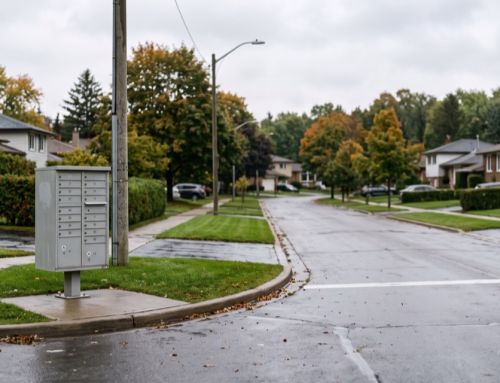
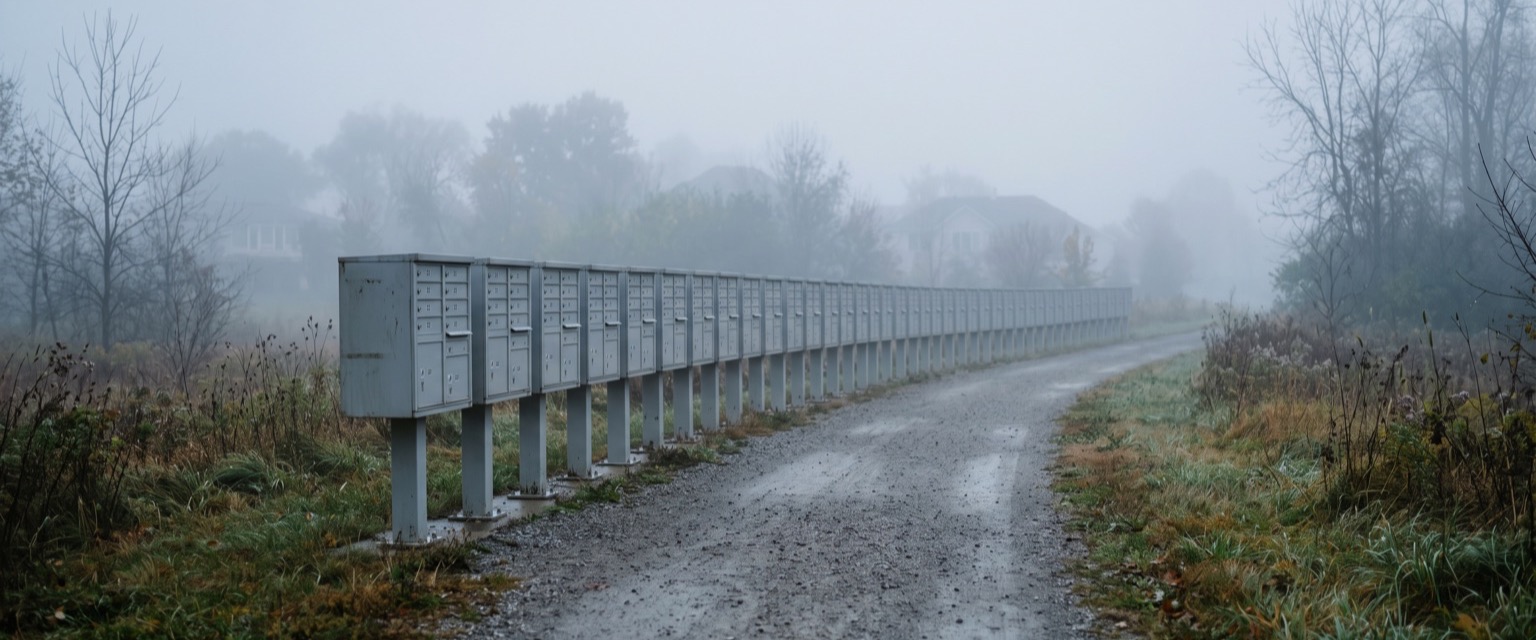
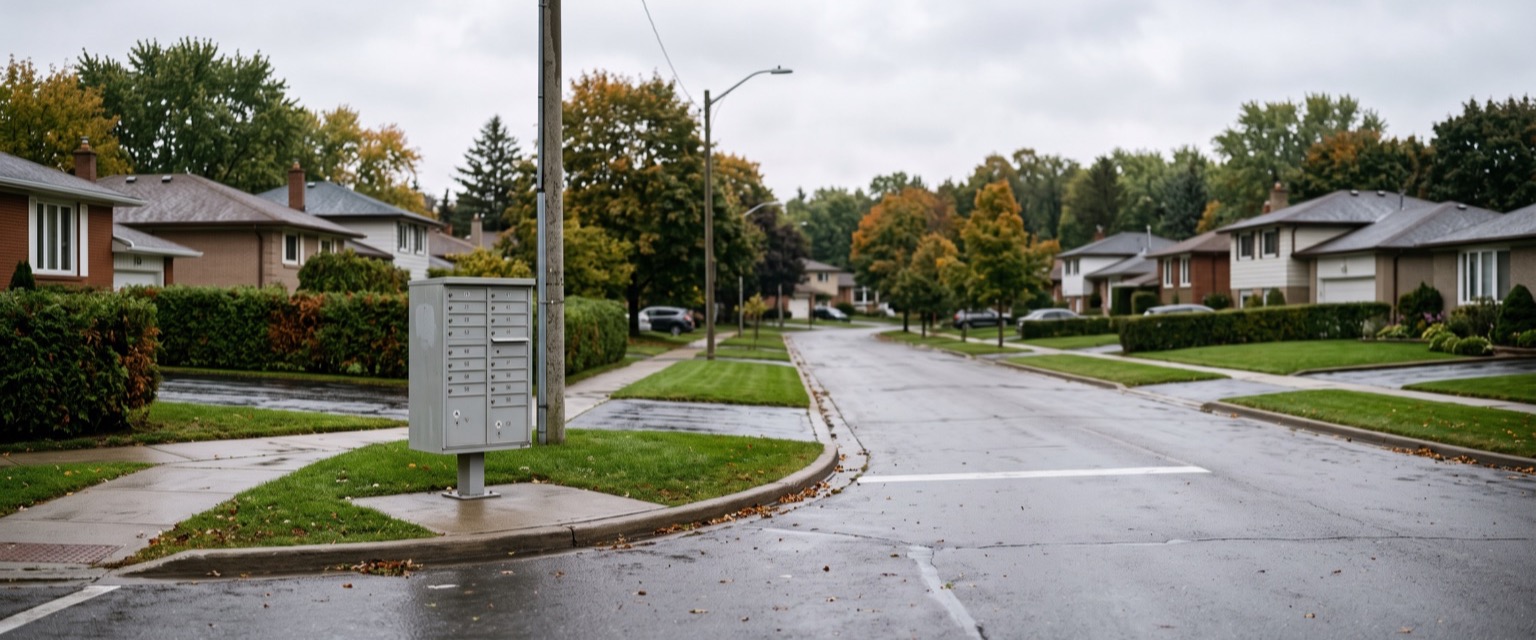
A community mailbox two blocks away is not on that route. Checking it becomes a decision, and a decision competes with everything else. Anyone who has had a post office box knows exactly how this goes. You mean to check it Thursday. You check it three weeks later and there is a stack.
That stack is where the real cost sits. It is not the walk. It is the CRA notice with a 30-day response window, the ICBC renewal, the strata special levy notice, the property tax deferment confirmation, the jury summons, the notice of a rate change on a mortgage renewal. None of those come by email for everyone, and several of them start a clock on the day they are mailed rather than the day you read them.
This is a behavior problem, not a postal problem, and Canada Post has no obligation to solve it.
3. Most parcels fit, some do not
Community mailbox units have individual compartments and separate larger parcel compartments. Canada Post says more than 80 percent of the parcels it delivers fit into one or the other.
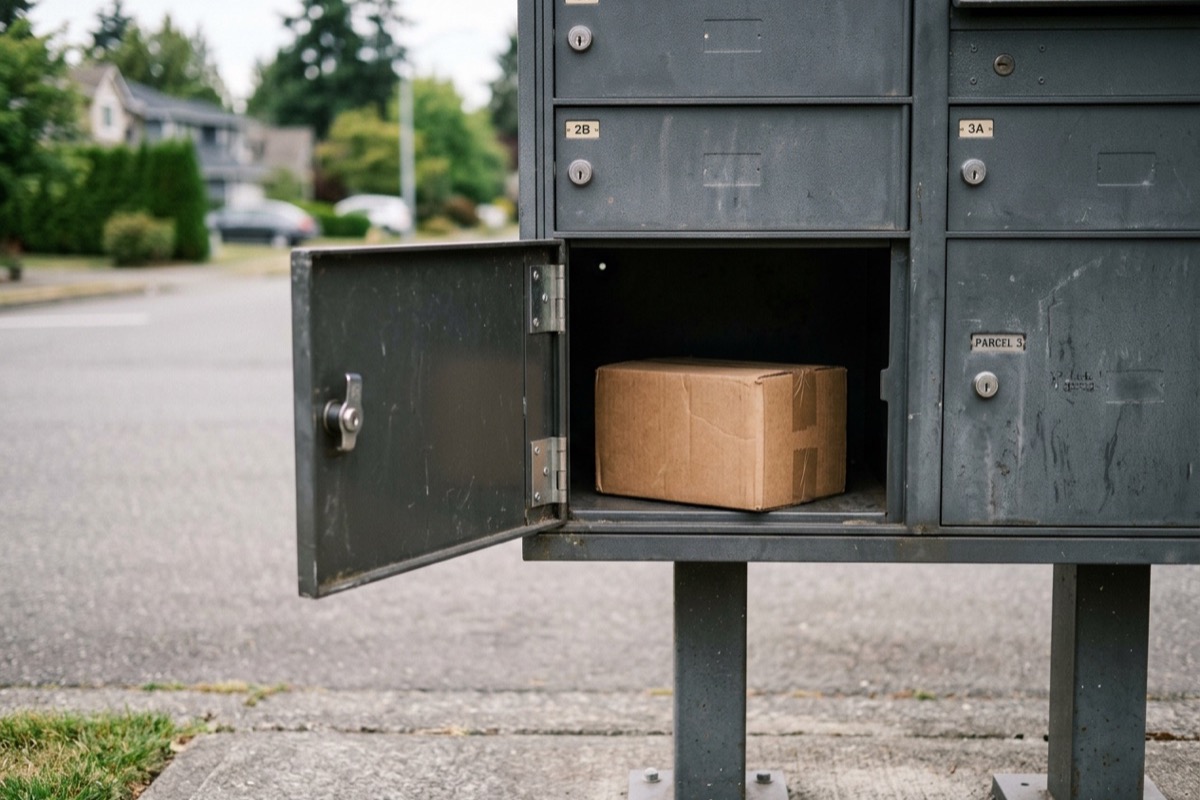
When a parcel goes into a parcel compartment, the carrier drops a key for that compartment into your personal mail slot. You take the parcel out and then put the key back through the mail slot.
The remaining parcels, meaning anything oversized or requiring a signature, either come to your door as before or get held at a post office for pickup.
Worth knowing: this applies to Canada Post parcels. Amazon, UPS, FedEx, Purolator and every courier working a gig contract will keep leaving boxes on your porch exactly as they do now. The conversion does not touch them. If porch theft is your concern, community mailboxes solve a small part of it at best.
4. Nobody tells you anything arrived
There is no notification. Not for letter mail, not for parcels.
The key that appears in your compartment when a parcel arrives is only visible to someone who has already walked over and opened the compartment. It is a notification you have to go and collect.
Combine that with the habit change in point two and you get the actual failure mode. Mail arrives. Nobody knows. It sits. The 30-day window becomes a 5-day window because 25 of those days were spent sitting in an aluminum box down the street.
5. Letter mail is also getting slower
Separate change, same transformation plan, and it compounds the first one.
Under the new delivery standards, non-urgent letter mail can move by ground instead of air. The expected effect is that average letter mail delivery goes from three to four days out to three to seven days.
So a notice mailed to you might take a week to reach the box, and then sit in the box until you happen to check it. Both halves of that got worse at the same time.
6. The accommodation program exists, and it is an application
If you or someone in your household cannot get to a community mailbox, Canada Post runs a Delivery Accommodation Program. It is free. More than 17,000 households already use it.
What it offers depends on the situation. A more accessible compartment. A sliding tray. Braille features. In some cases, weekly delivery to the door, on a seasonal, temporary or permanent basis.
Two honest caveats.
It is weekly delivery, not daily, in the cases where home delivery is granted. And it is an application that gets reviewed, not an entitlement you claim. The Canadian Union of Postal Workers has criticized the program as limited in scope and difficult to navigate, and has pointed to fall risk for older residents crossing ice and snow to reach a box. Whatever you think of the union’s position on the conversion generally, the point about the application process is worth taking seriously if you are helping an elderly parent through it.
Apply early. Do not wait until the boxes are installed.
7. You have a say in where the box goes, briefly
This is the one lever residents actually have, and most people miss the window.
Community mailbox locations are finalized in consultation with the municipality and have to meet Canada Post’s operational and safety requirements. Your city cannot stop the conversion. It can argue about placement, and placement is the difference between a box at the end of your block and a box eleven minutes away across an arterial road.
New Westminster council pushed back publicly in July 2026. Mayor Patrick Johnstone said he had heard from residents and that mayors in Burnaby, Coquitlam, Port Coquitlam and Port Moody were fielding the same complaints.
If you care where the box lands, contact your council now rather than after the site survey. Siting work for the March 2027 North Shore conversion is happening this year.
What your options actually are
Once the conversion happens, there are four realistic paths.
Use the community mailbox and build a new habit. Free. Works fine if you are home regularly, mobile, and disciplined about checking. Set a recurring reminder, because relying on remembering is the thing that fails.
Apply for accommodation. Free, if you qualify. Worth doing for anyone with mobility limits, and worth starting early.
Rent a post office box. Paid. Still requires you to go and check it, and post offices have limited hours. It solves security, not the habit problem. Canada Post is also reviewing its retail network with an eye to closing some urban and suburban locations, so the branch you pick may not be there in five years.
Use a staffed mail service. Paid. Somebody receives your mail, tells you it arrived, and holds or forwards it.
That last one is what we do. Our Smart Mailbox service scans incoming mail and emails it to you, accepts and signs for parcels from any courier, and holds the physical mail for pickup or forwards it based on your preference. The point is not the address. The point is that something arriving triggers a message to you the same day rather than sitting in a box waiting to be discovered. Details are on the virtual office service page.
One thing we will say plainly, because it matters more than a conversion: a mail service address is not a residential address. It does not replace your home address for a driver’s license, for voter registration, for your CRA residency, or for anything else that requires proof of where you live. It handles mail. If somebody tells you otherwise, they are selling you something they should not be.
For where all of this is heading over the next decade, see where residential mail is heading.
Common questions
Community mailbox conversion North Vancouver: when does it happen?
March 2027 is the anticipated date for postal codes V7M, V7P, V7R, V7S, V7T, V7V and V7W, which covers both North Vancouver and West Vancouver. Canada Post describes the date as subject to change.
Which Burnaby postal codes are converting to community mailboxes?
V3N and V5E, anticipated October 2027. Other Burnaby postal codes are not on the current published schedule.
Will Canada Post tell me before my mail delivery changes?
Yes. Canada Post notifies residents of their community mailbox location once the site is finalized, and provides notice and keys before delivery changes. The conversion process for a neighborhood typically takes months.
What happens to parcels after the community mailbox conversion?
More than 80 percent of Canada Post parcels fit into a community mailbox compartment or a dedicated parcel compartment. The carrier leaves a key in your mail slot for the parcel compartment. Oversized parcels and anything requiring a signature are delivered to your door or held at a post office. Courier deliveries from Amazon, UPS, FedEx and Purolator are unaffected.
Can I keep door-to-door delivery if I cannot reach a community mailbox?
Possibly. Canada Post’s Delivery Accommodation Program is free and can provide an accessible compartment, sliding trays, Braille features, or in some cases weekly home delivery on a seasonal, temporary or permanent basis. It requires an application that Canada Post reviews.
Will I be notified when mail arrives in my community mailbox?
No. There is no arrival notification for letter mail or parcels. A parcel compartment key is placed in your personal mail slot, which you only see once you go and check.
Sources
- Canada Post, The move to community mailboxes: postal codes scheduled for conversion
- Canada Post, Canada Post expands community mailbox conversions to additional communities in 2027, June 11, 2026
- CBC News, Canada Post is planning to end home delivery. Here’s how community mailboxes will work, April 2026
- North Shore News, Canada Post to cut door-to-door delivery for 23,000 North Van, West Van households, April 2026
- Freshet News, New Westminster urges Canada Post to take a balanced approach to mailbox conversions, July 2026
- CUPW, Community Mailbox Conversion fact sheet, June 2026
- Canadian Press via Rocky Mountain Outlook, Canada Post set to reduce frequency of letter mail delivery, September 25, 2025
Facts in this article were verified against primary sources on August 27, 2026. Canada Post describes its conversion dates as anticipated and subject to change. Check canadapost.ca/ourtransformation for the current schedule.

Leave A Comment